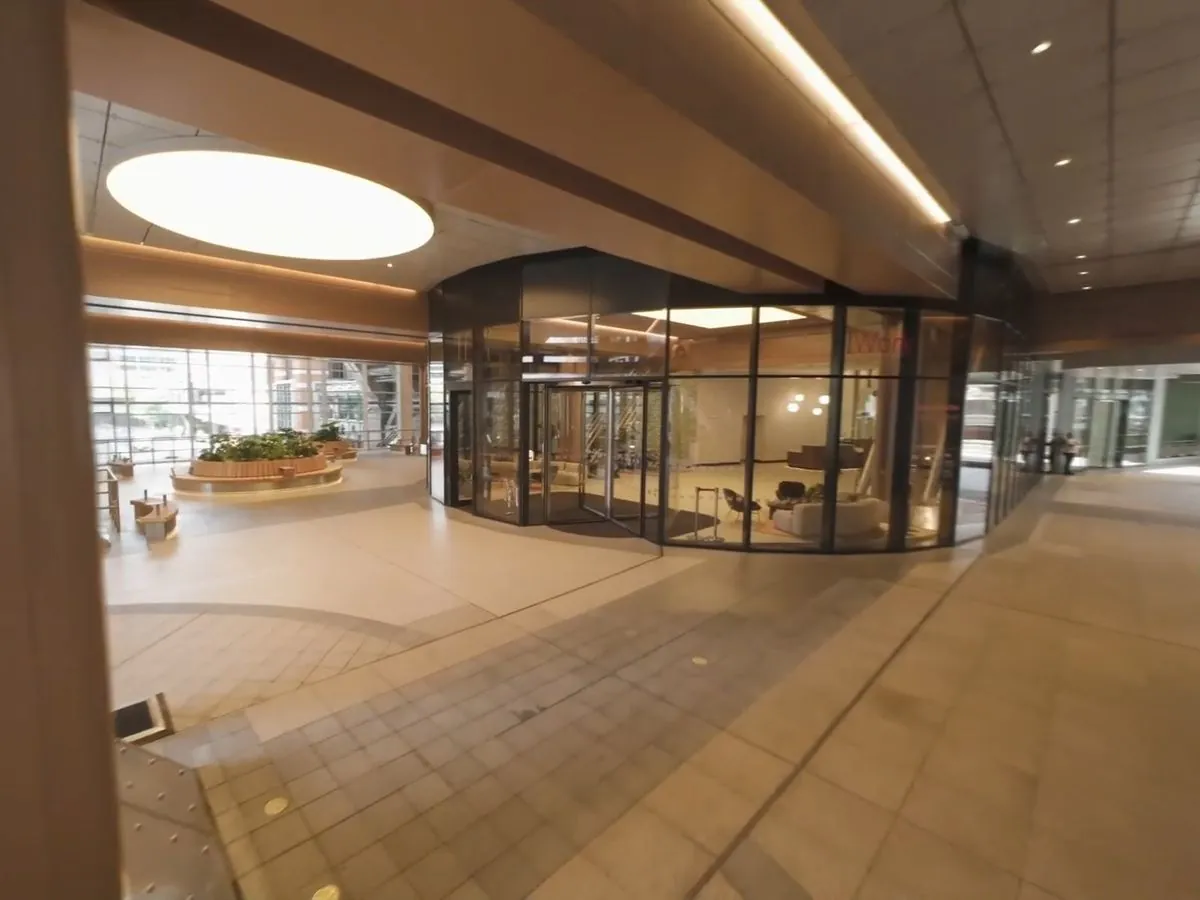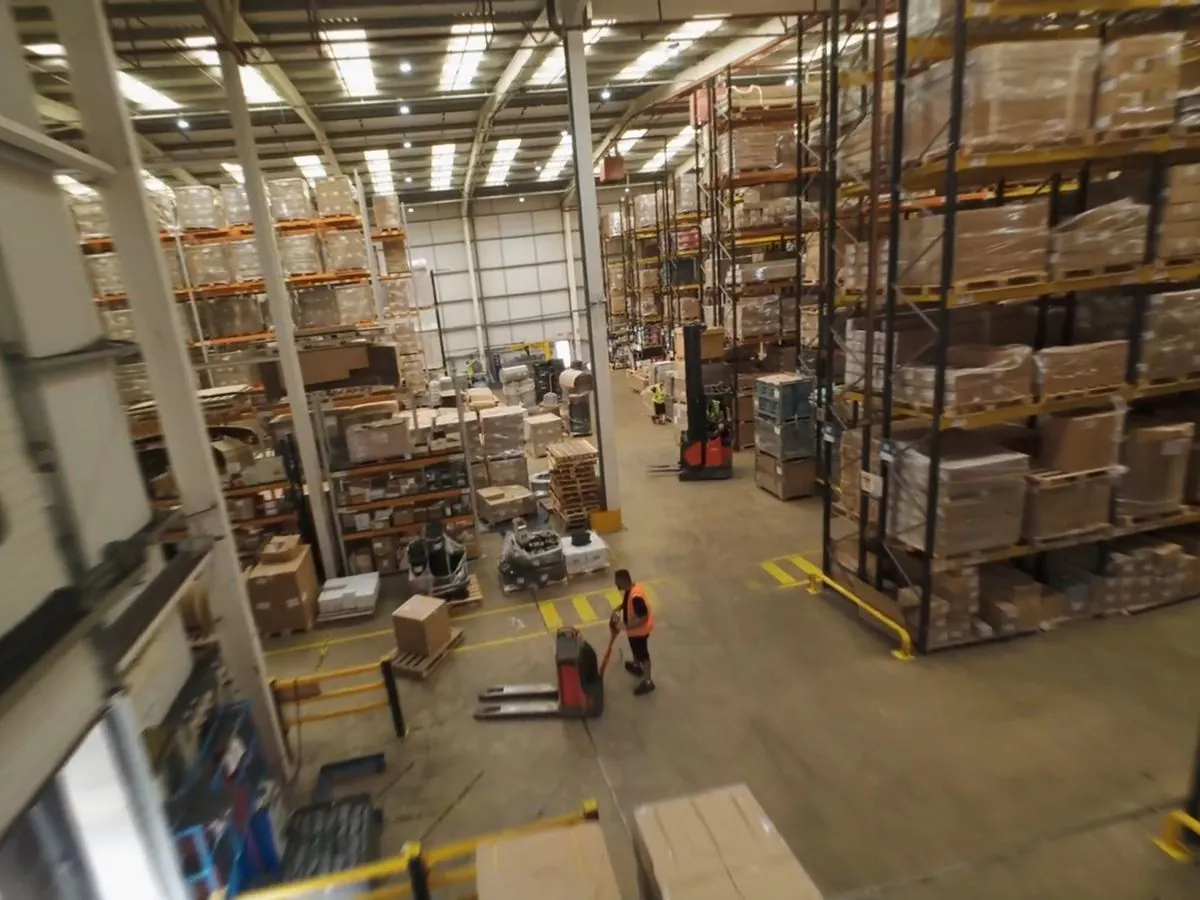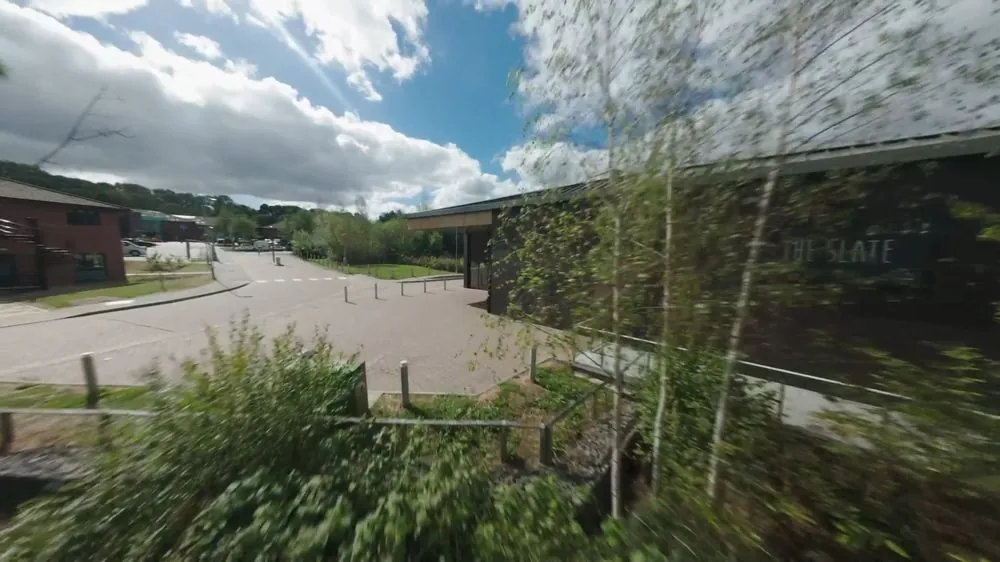
If you're considering drone video for your business, you've probably seen two very different styles: smooth aerial "establishing" shots from a traditional camera drone, and fast, immersive "you're right there" footage from an FPV drone. Both are useful, but they're built for different jobs.
In this guide you'll learn the real-world difference between FPV drone filming and traditional drone videography, when to use each, and what to ask for if your goal is a standout fly-through or venue tour, anywhere in the UK.
FPV vs traditional drone videography: the simple definition
FPV (first-person view) drone filming uses a small, highly agile drone piloted in real time through a headset, allowing it to fly smoothly through tight spaces and around obstacles for immersive fly-through footage.
Traditional drone videography typically uses a GPS-stabilised camera drone designed for steady aerial shots, higher-altitude viewpoints and slower, cinematic movements.
What traditional drone videography is best at
Traditional drones (think GPS-stabilised camera drones) are designed to produce steady, cinematic aerial footage with minimal risk and predictable flight paths. They excel at showing the big picture.
Typical strengths
- High, wide establishing shots of a property, venue, site or landscape
- Slow cinematic moves: rises, reveals, push-ins and orbits
- Consistent stabilisation even in wind (within safe limits)
- Efficient coverage for exteriors where space isn't restricted
Where traditional drones struggle
- Tight interiors, narrow corridors, staircases and close passes
- Dynamic "one-take" fly-throughs that weave through a space
- Getting very close to objects or people safely, especially at speed
For many businesses, traditional drone video is the right choice when the priority is location context: where you are, the scale, access routes, the surrounding area and exterior beauty shots.
What FPV drone filming is best at
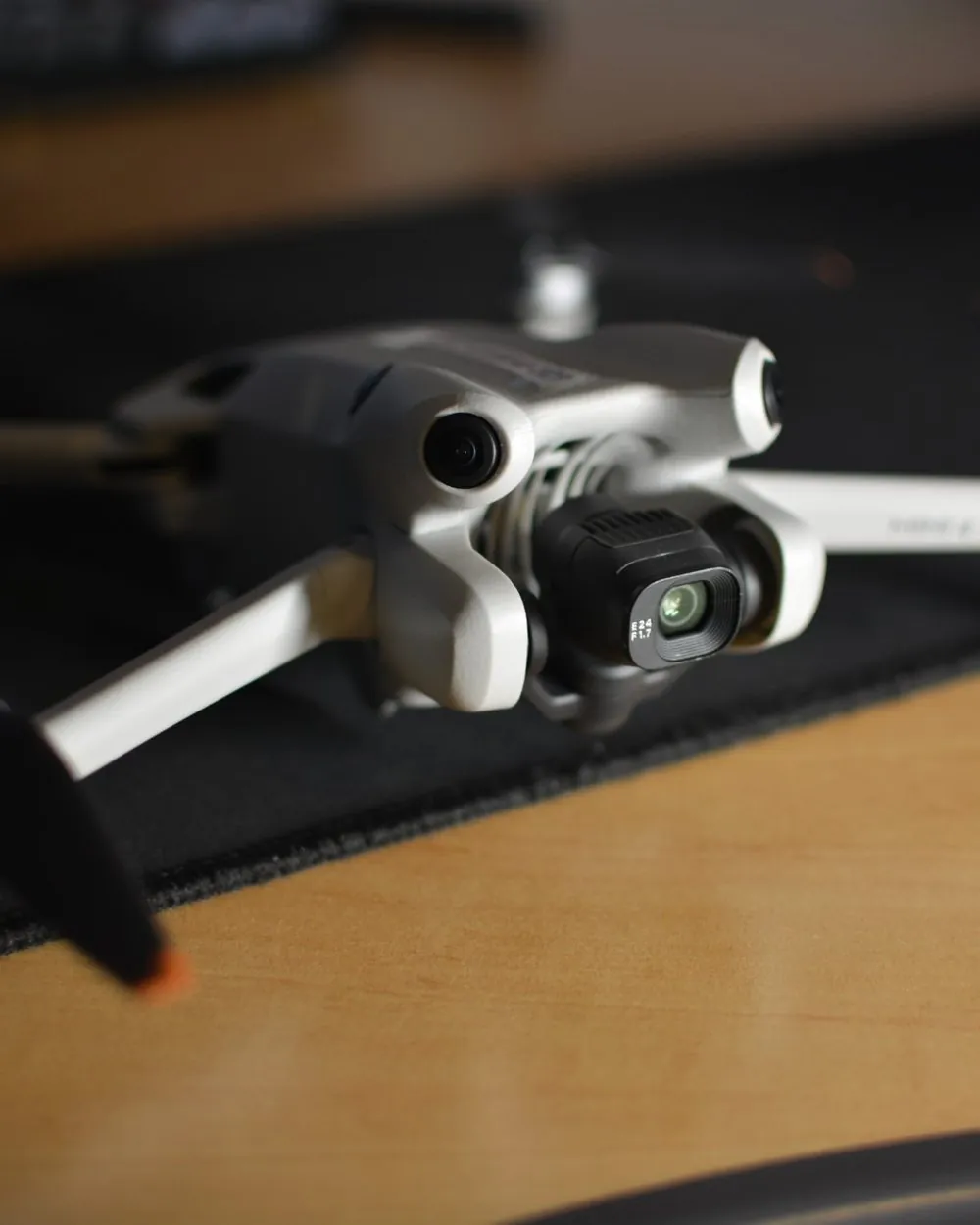
FPV drones are built differently. They're typically smaller, more agile and flown manually. The result is a fluid, immersive camera movement that can travel through spaces in ways standard drones can't.
Typical strengths
- Fly-throughs and walkthrough-style tours that flow through entrances, corridors, rooms and key features
- Venue tours that show layout, atmosphere and how it feels to move through the space
- Dynamic movement: sweeping transitions, tight lines and creative reveals
- Indoor capability (where suitable and safe), because the drone can be smaller and more responsive
- Storytelling: the camera becomes a guided experience, not just a viewpoint
Where FPV can be the wrong tool
- Very high-altitude establishing shots, where traditional drones are usually better
- Long backwards "pull-away" shots that track a subject while flying backwards, where a traditional drone's stable, assisted tracking is more predictable
If your goal is to make a viewer feel like they've already visited your venue, FPV is often the strongest format.
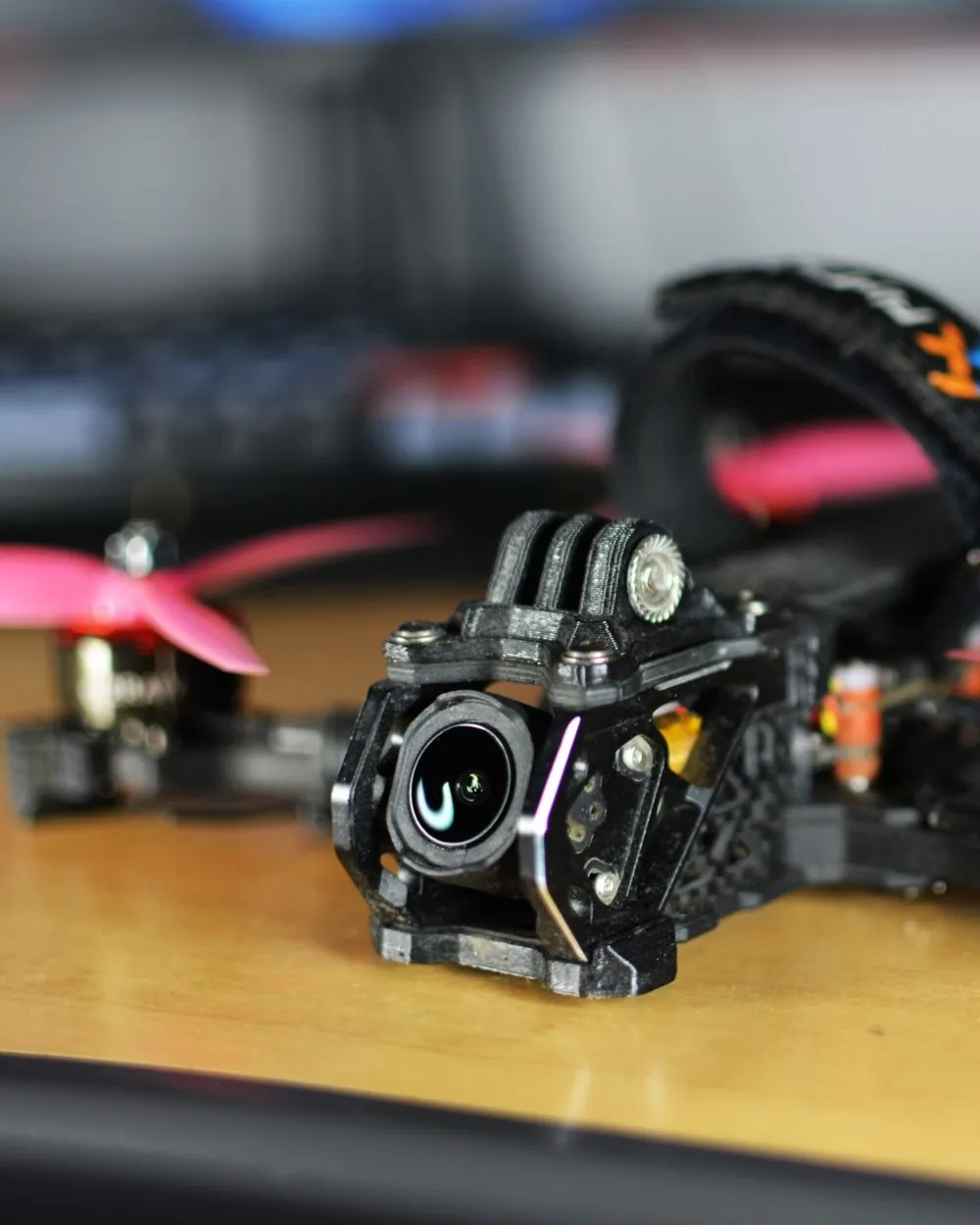
Comparison: FPV drone filming vs traditional drone videography
| Feature | FPV drone filming | Traditional drone videography |
|---|---|---|
| Best for | Fly-throughs, venue tours, immersive movement | Establishing shots, aerial views, slow cinematic shots |
| Flight style | Manual, agile, close-proximity lines | GPS-stabilised, smooth, slower movements |
| Indoor filming | Often suitable, with planning and safety controls | Usually limited or not appropriate indoors |
| Tight spaces | Excellent: doorways, corridors, staircases | Limited |
| Exterior coverage | Great for low-level, dynamic passes | Excellent for high and wide shots and reveals |
| One-take tours | A core strength | Less common and harder to execute |
| Viewer experience | Immersive, energetic, in the action | Scenic, calm, contextual |
| Production approach | Heavier on route planning and rehearsals | Efficient capture of multiple aerial angles |
| Typical deliverables | Hero fly-through, social cuts, transitions | Establishing sequence, cutaways, scenic montage |
Which should you choose for a commercial project?
Most commercial clients don't need to choose one or the other. The best results often come from using both styles strategically.
Choose FPV if you need
- A venue tour that sells the flow, layout and experience
- A fly-through showing multiple areas in one continuous shot
- Footage that feels modern, high-energy and premium
- A strong hero asset for your website, paid social and campaigns
Choose traditional drone video if you need
- A clear exterior overview: location, size and surrounding area
- Cinematic establishing shots to open a film or ad
- Clean, steady aerial angles for a polished brand montage
- Scenic shots where altitude and stability matter most
Choose both for the most complete story
A common structure for commercial video is:
- A traditional drone establishes the location and scale
- FPV takes the viewer inside for the immersive tour
- The traditional drone returns for a final exterior hero reveal
That combination works brilliantly for venues, hospitality, leisure, real estate marketing and brand spaces.
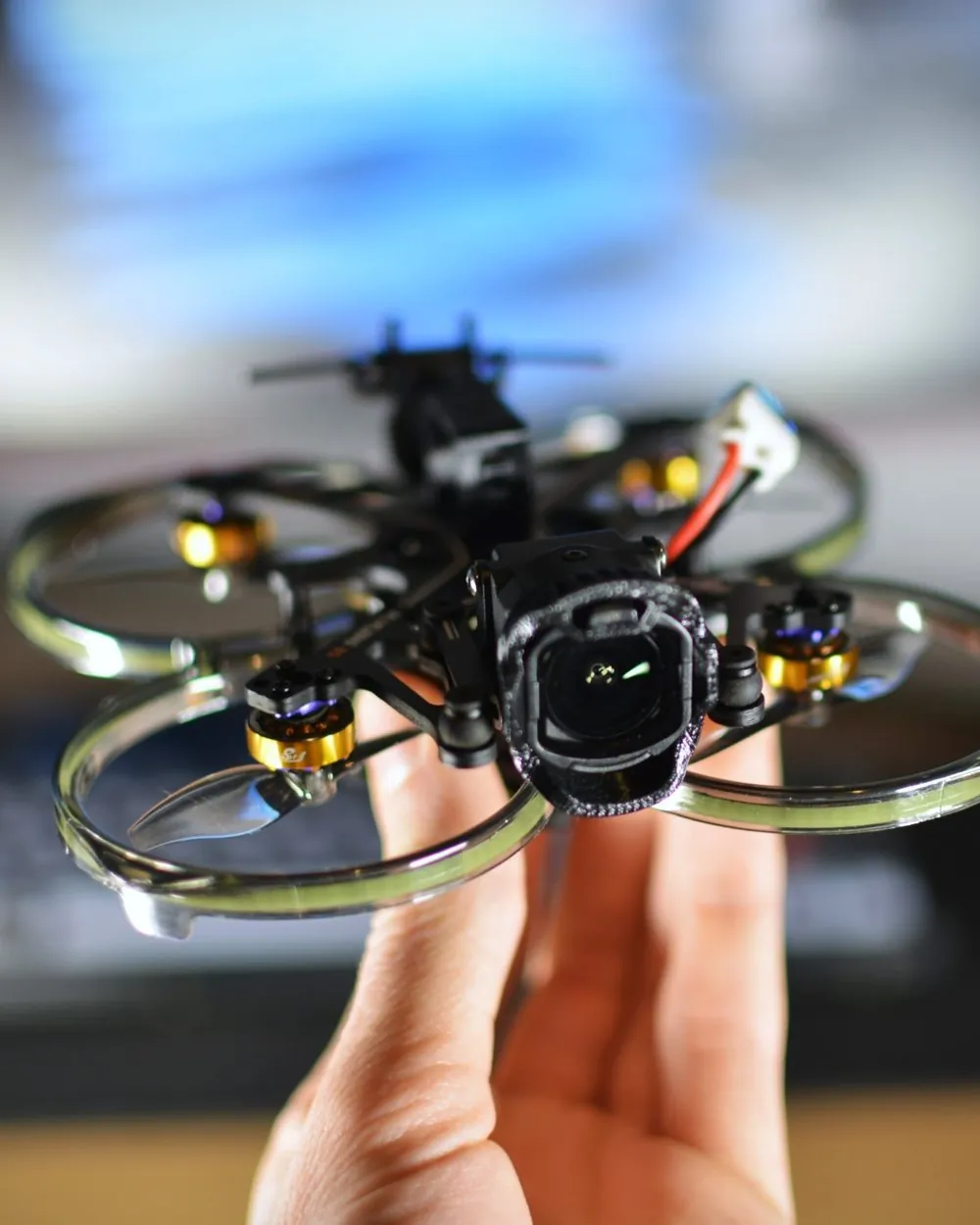
FPV drone filming in the UK: what to know
UK drone filming is shaped by safety requirements, airspace rules and location realities. In practice that means:
- Some areas need additional planning because of nearby airports, controlled airspace or sensitive sites. We'll always help with this.
- Indoor flights still need careful risk management, even though airspace rules differ indoors
- If your venue is open to the public, timing and controlled access matter more than the drone type
- Professional operators plan routes, set safety boundaries and choose the right equipment for the environment
The takeaway: the "cool" shot should always come after the plan. A good FPV flight looks effortless because the preparation is thorough.
What the shoot day looks like
Traditional drone shoot: typical workflow
- Quick site assessment: wind, take-off and landing area, public access
- A variety of aerial angles: wides, reveals, orbits and tracking shots
- Minimal resets and lots of efficient coverage
- Optional ground camera shots, if they're part of the project
FPV fly-through shoot: typical workflow
- A walkthrough with you to map the story of the space
- Route planning: entrances, transitions, key features and exit points
- Safety setup: clear zones, a spotter where needed, and timing for when the space is quiet
- Rehearsal passes to refine speed, height and smoothness
- Several recorded takes, plus supporting shots for flexibility in the edit
This is why FPV fly-throughs often feel like a choreographed camera move: because they are.
Checklist: preparing for an FPV fly-through or venue tour
- Decide the goal: tour, brand feel, capacity showcase or facilities overview
- Pick the hero route: where should the viewer start and finish?
- Tidy visual distractions: loose cables, bins, signage clutter, cleaning trolleys
- Check the lighting: switch on feature lighting and keep it consistent across rooms
- Plan people movement: staff positions and timed actions, like doors opening or a welcome
- Think about sound: if you want ambient audio or a voiceover, plan it separately
- Access and timing: quieter periods help, especially for one-take fly-throughs
- Brand moments: menus, logos, signature features and your best angles
Common misconceptions
"FPV is always fast and chaotic."
Not necessarily. FPV can be slow, elegant and precise, especially for premium venues. Speed is a creative choice, not a requirement.
"Traditional drones can do the same thing."
Traditional drones can sometimes attempt interior shots, but they're generally not designed for tight indoor fly-through work. FPV is built for close-proximity routes and controlled, manual movement.
"FPV is only for extreme sports."
FPV is now widely used for commercial tours, hospitality, gyms, showrooms and branded spaces, because it communicates layout and atmosphere quickly.
Why BusterVisuals
At BusterVisuals, FPV isn't an add-on; it's a core craft. Fly-throughs and venue tours only work when the piloting is genuinely precise and repeatable.
- Every shoot is planned carefully, with clear safety boundaries and a full risk assessment
- The filming style is cinematic and controlled, not reckless
- FPV is flown by a Team GBR FPV drone racing pilot, which matters when the route is tight and the movement needs to feel effortless
- We fly both FPV and traditional aerial on one booking, so you get every angle
What next?
If you're weighing up FPV against traditional drone video for a venue tour or fly-through, the quickest way to get clarity is to describe your space and what you want viewers to feel. Send us an enquiry and include:
- Your venue type and location
- Whether you want an interior fly-through, exterior context shots, or both
- Any must-show features: entrance, bar, stage, equipment zones, suites and so on
We'll advise the best approach, and come back within 24 hours on weekdays. You can also see the shots we fly.